
 How to Clean Your Gutters Yourself (Step-by-Step Guide for Vancouver Homeowners)
Meta description: Learn how to clean your gutters yourself with this step-by-step guide built for Vancouver’s rainy climate. Tools, safety tips, and when it’s smarter to call a pro.
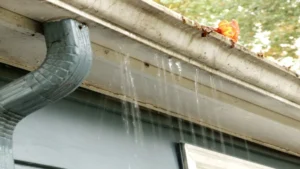
If you’ve ever watched rain pour over your gutters instead of through them, you already know the problem. Clogged gutters aren’t just ugly — they push water into your fascia, foundation, and basement. In Vancouver, where fall brings weeks of nonstop rain and trees drop leaves like it’s their full-time job, clean gutters aren’t optional. They’re infrastructure.
The good news? Cleaning them yourself is doable. The bad news? Most people skip a few steps and wonder why they’re back on the ladder six weeks later.
This guide walks you through the whole process — what to use, what to watch for, and when it actually makes more sense to pick up the phone.
What You’ll Need Before You Start
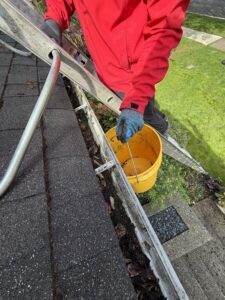
Nothing worse than climbing a ladder and realizing you forgot the bucket. Gather everything first:
- Ladder — an extension ladder for most single-storey homes, an A-frame for low sections
- Work gloves — gutters are full of decomposed leaf sludge. Trust.
- 5-gallon bucket with a hook — hang it on the ladder so your hands stay free
- Garden hose with a spray nozzle — for flushing once the debris is out
- Safety glasses — because gutter gunk has a talent for landing in eyes
- Shop vac (optional) — for a cleaner, faster job, especially if you hate scooping wet leaves by hand
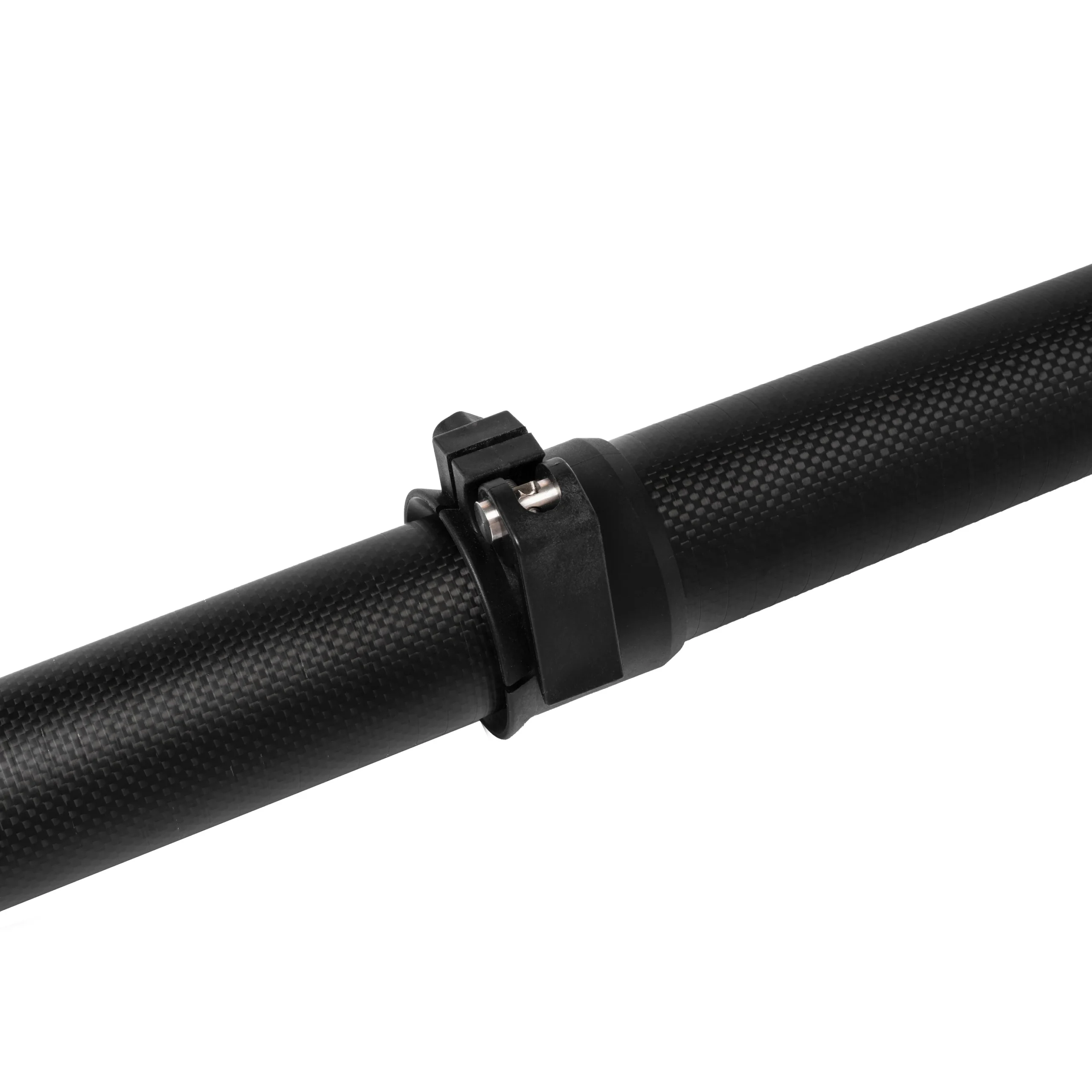
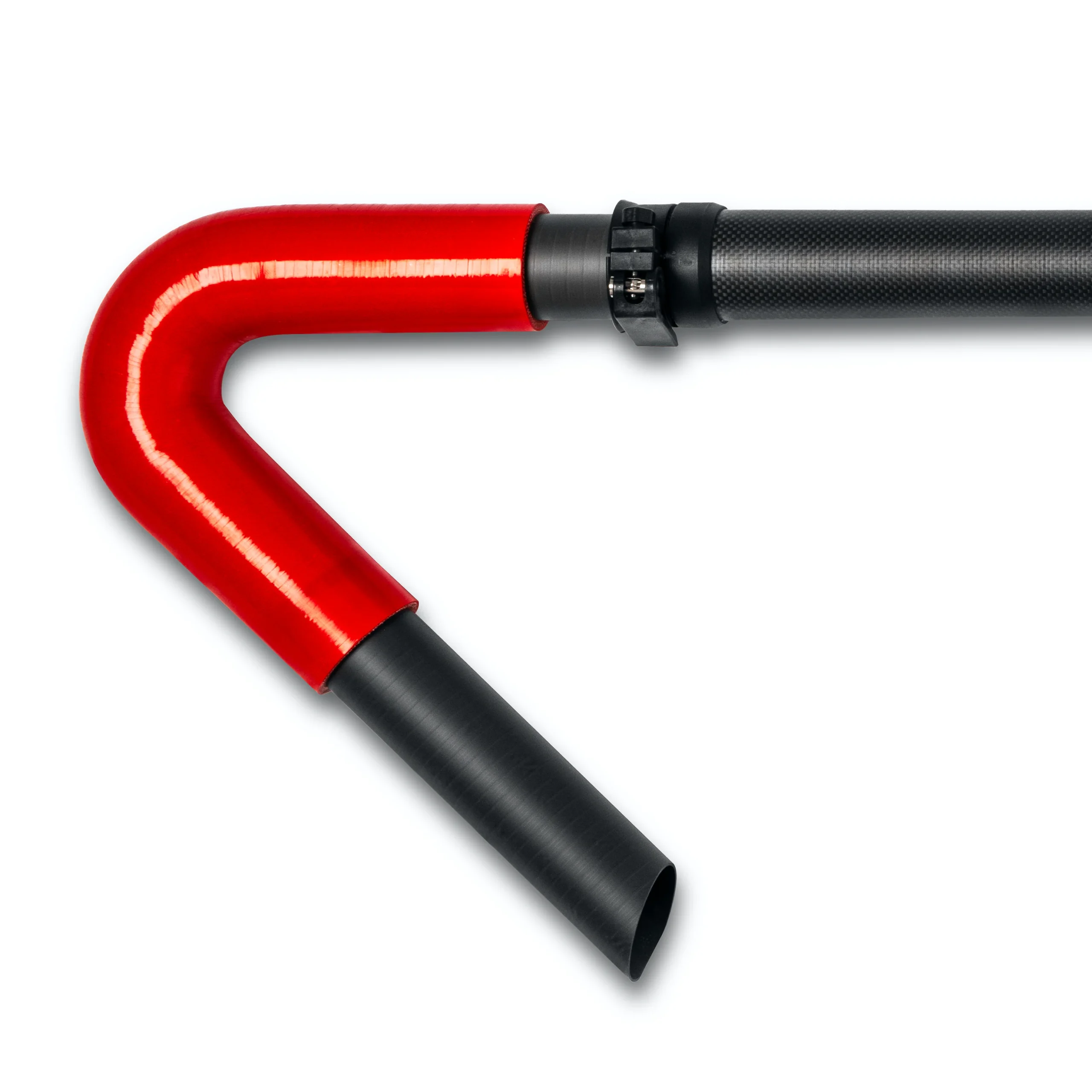
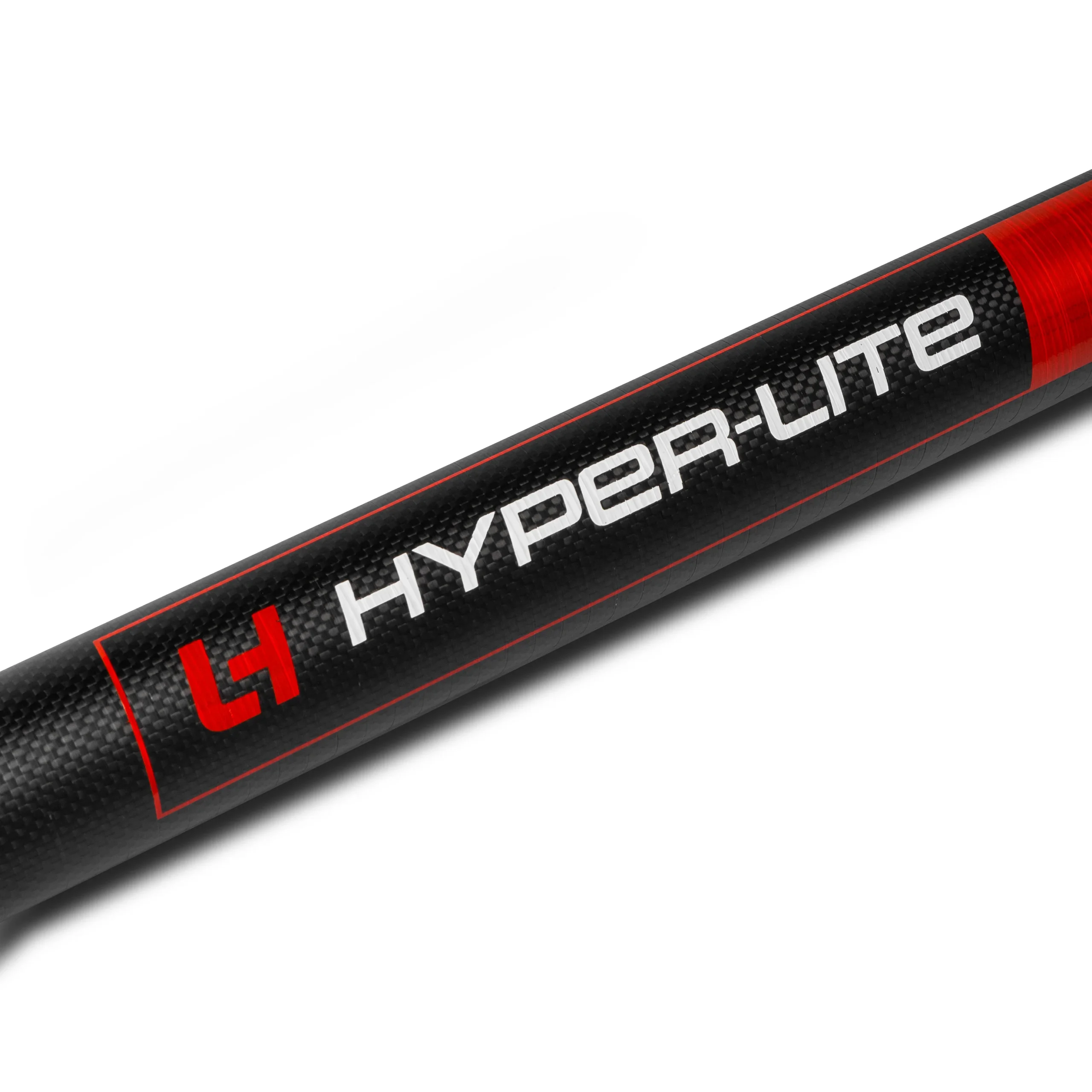
Prefer to skip the ladder entirely? Hyper-Lite Poles makes a 3K carbon fiber gutter vacuum pole set with 30ft reach that hooks up to most shop vacs — you clean from the ground, no ladder needed. There’s also an angle adapter for reaching awkward corners. Worth knowing about if you do this regularly.

Step 1: Safety First (Seriously)

Before you get anywhere near the roof line, a few things worth knowing:
Place your ladder correctly. The base should sit 1 foot out for every 4 feet of height. Most ladders have adjustable feet — use them to get a stable, level base on uneven ground before you climb anything.
Use ladder standoffs. These are the single most important piece of kit most homeowners skip. Standoffs hold the ladder away from the wall and distribute the load onto the fascia board rather than the gutter itself. Leaning directly against a gutter will dent it, pull it away from the fascia, or both. Standoffs also give you better access to the gutter channel since you’re not blocked by the ladder rails.
Don’t overreach. The temptation is to stretch a little further to avoid moving the ladder. That’s how people fall. Move the ladder. Every time.
Check the weather. Wet roof surfaces and aluminum ladders are a bad combination. Pick a dry day if you can.
Know your limits. Two-storey homes, steep pitches, or gutters above 20 feet — that’s where “I’ll do it myself” starts to cost more than it saves. More on that at the end.
Step 2: Clear the Roof First
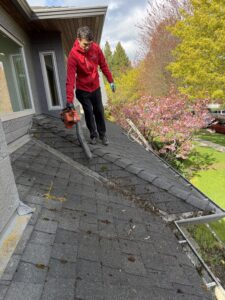
Before you touch the gutters, check the roof surface above them. If there’s a layer of leaves, moss, or debris sitting on the roof, it’ll wash straight into your freshly cleaned gutters the next time it rains — or even while you’re flushing them. A quick sweep with a roof rake or soft broom from the ladder takes five minutes and saves you a follow-up clean.
This is especially true in Vancouver where moss and cedar debris build up on roofs year-round. Clear the roof first, then move to the gutters.
Step 3: Remove the Debris
=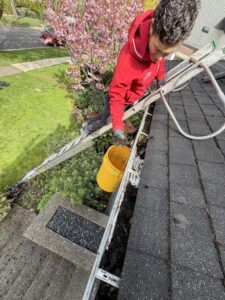
Start at the far end of the gutter — the end farthest from the downspout — and work your way toward it. This way you’re pushing debris to the exit, not packing it against a drain.
Scoop out the big stuff first: wet leaves, pine needles, roof grit, whatever Vancouver’s trees have been depositing since last fall. Dump it in your bucket rather than onto the ground (unless you enjoy raking twice).
Once the bulk is out, run your gloved hand along the bottom of the gutter channel to pull out the sludge that clings to the metal. This is the part that causes slow drains even when the gutter looks clear.
Three techniques worth knowing about
The section-by-section method (hand cleaning): Use ladder standoffs to position your ladder safely beside the gutter, climb up, clean the section you can reach by hand, come back down, move the ladder over, repeat. It takes longer but you’re never overreaching or putting yourself in a sketchy position.
One small upgrade that makes this a lot less annoying: a bucket hook. It clips onto your bucket handle and hangs directly from the gutter, so the bucket stays put while both hands are free to scoop. No holding the bucket, no balancing act.
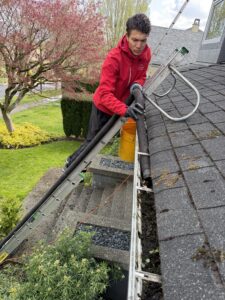
The vacuum hose method (more thorough, handles liquid debris too): If you have a shop vac and a long hose, slide the hose along inside the gutter channel from the ladder and vacuum a much longer stretch before repositioning. The real advantage over hand cleaning is that a vacuum picks up liquid debris — the wet sludge sitting at the bottom that a scoop leaves behind. If you go this route, you can skip the water flush in the next step. The vacuum already did that job.

The pole system (best option for most homeowners): A carbon fiber vacuum pole system — like the ones from Hyper-Lite Poles — connects to your shop vac and lets you clean from the ground with up to 30ft of reach. No ladder needed at all. For a homeowner cleaning their own gutters once or twice a year, this is the most practical setup. The angle adapter handles corners and recessed sections without repositioning.
What you’re looking for while you’re up there:
- Sagging sections (the gutter should slope slightly toward the downspout — roughly ¼ inch per 10 feet)
- Rust spots, holes, or cracks in the metal
- Gutters pulling away from the fascia board
- Seams that have separated and are leaking at the joints
Any of those are signs of trouble beyond a cleaning. Don’t ignore them.
Step 4: Flush the Gutters and Test the Downspouts
Skip this step if you cleaned with a vacuum — it already pulled out the debris and liquid. Just run a quick check on the downspout to confirm flow.
Once the debris is out, grab your garden hose and flush from the far end toward the downspout. This does two things: clears out the fine grit left behind, and shows you whether water is flowing at the right angle. If it pools in the middle, the slope is off and you’ll want to adjust the hangers.
Check the downspout. Run the hose into the top of the downspout and watch what comes out the bottom. Good flow = clear pipe. Slow trickle or nothing = blockage.
To clear a blocked downspout, try feeding the hose directly into the bottom opening and running it at full pressure upward. If that doesn’t shift it, a plumber’s snake or auger usually does the job. Avoid hammering on the outside of the pipe — you’ll dent it.
Once the water’s flowing clean, let it run for 30 seconds and watch where it drains at ground level. It should be directed away from your foundation, not pooling against the house.
Step 5: Clean the Outside of the Gutters (The Step Most People Skip)
![Alt text: Black streaking and mildew stains on the exterior face of white aluminum gutters]
Here’s the part that most DIY guides don’t mention: the outside of your gutters is probably gross.
Those dark vertical streaks running down the face of the gutter? That’s a mix of oxidized aluminum, mould, and tannins from decomposing leaves. It’s called “tiger striping” and it won’t come off with a hose.
To clean it properly:
- Mix a cleaning solution of warm water, dish soap, and a splash of white vinegar
- Apply it to the exterior face with a soft-bristle brush
- Scrub in sections and rinse as you go
Avoid abrasive pads or steel brushes — they scratch the coating and make future staining worse. For serious mould or heavy oxidation, a product like Krud Kutter or a diluted bleach solution (1 part bleach to 10 parts water) works well, but rinse thoroughly and keep it off your plants.
This step takes maybe 20 minutes and makes a noticeable difference in how the whole house looks.
How Often Should You Clean Your Gutters in Vancouver?
![Alt text: Tree branches hanging over a Vancouver home roofline covered in fall leaves]
The short answer: twice a year minimum. Once in late fall after the leaves have dropped (November is usually right), and once in early spring to clear out winter debris and check for any damage from frost or storms.
If you have large trees close to the house — cedar, maple, or pine are the usual culprits — bump that to three or four times a year. Pine needles in particular pack into downspouts like they were designed to.
Vancouver-specific things that accelerate buildup:
- Moss and algae — our wet winters mean moss grows on gutters and roof edges, and it sheds constantly
- Cedar debris — cedar trees drop small fibrous material year-round that compacts into a dense mat at the bottom of gutters
- Heavy rain events — a single bad windstorm can fill a clean gutter in 24 hours
If you’re doing it yourself, stick to a calendar reminder rather than waiting until water starts overflowing. By that point, you likely already have water sitting against the fascia.
When to Call a Professional Instead
There’s no shame in deciding this one isn’t worth your Saturday. Here’s when professional gutter cleaning makes more practical sense than DIY:
Your home is two storeys or taller. Working at height above 20 feet on a residential ladder is genuinely risky, and most homeowner ladders aren’t rated for it. Professional crews have the right equipment and work in teams.
The buildup is heavy. If you haven’t cleaned in two or three years, you’re likely dealing with compacted debris and possible standing water. That’s a bigger job than a quick flush.
You want a guarantee. Doing it yourself means if it clogs again in three weeks, you’re back up the ladder. Professional services like GutterVac come with a 90-day no-clog guarantee — if it blocks within that window, they come back.
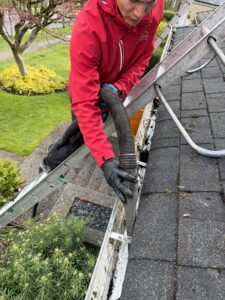
You want the exterior cleaned too. A vacuum clean of the interior gutter is one thing. Getting rid of the black staining on the exterior face requires the right solutions, soft brushes, and a process. GutterVac handles both: interior vacuum cleaning that removes all debris, mud, and sludge, and exterior cleaning with eco-friendly solution and soft bristle brushes for mould and stains.
What actually separates GutterVac from other companies
Here’s something worth knowing, because a lot of companies out there claim they “vacuum your gutters” — and technically, they do. But there’s a big difference in what that actually means.
Most of those companies clean from the ground. They use long vacuum poles, suck up whatever they can reach from the pavement, and call it done. It’s faster, it’s cheaper to deliver, and it avoids the hassle of getting up on the roof. The problem is that ground-level vacuuming misses the compacted sludge sitting at the bottom of the gutter channel — the stuff that’s been sitting there for two years and isn’t going anywhere without direct contact.
GutterVac does it differently. Their crew goes up on the roof. They use long vacuum hoses connected to a high-powered unit on the ground, and they vacuum the gutters directly — from above, working the full length of every channel. That’s what actually gets the gutter clean, not just the top layer of loose leaves.
It’s a small distinction that makes a real difference. They’ve been doing this for 16 years and have worked on enough gutter systems across the Lower Mainland to know where the problems hide. That’s not something you pick up in a season.
Bottom Line
Cleaning your gutters yourself is completely manageable for most single-storey homes with basic tools and a free afternoon. Follow the steps, don’t skip the exterior, and set a reminder to do it before the rains hit every fall.
If the job is bigger than you expected, or you just don’t want to spend your weekend on a ladder — GutterVac covers the whole Lower Mainland and will get it done properly, with a guarantee.
And if you’re the type who actually enjoys doing it yourself and wants a better tool for next time, the Hyper-Lite carbon vacuum pole set lets you clean from the ground — no ladder, no mess, 30 feet of reach.
Either way, your gutters will thank you. Your foundation will too.
GutterVac Home Services has been serving Vancouver and the Lower Mainland since 2010. Request a free estimate here or call 778-814-8380.